As we look ahead to 2026, the landscape of security is characterized by convergence, complexity, and scale. Enterprises are grappling with a world where cyber incidents can lead to physical shutdowns, and physical breaches are exposing digital vulnerabilities. This scenario is further complicated by the increasing reliance on cloud-based systems and the dual use of artificial intelligence (AI) by both defenders and attackers. Major incidents in 2025, particularly the AWS outage, have starkly revealed the interdependence of modern security environments.
According to Microsoft’s 2025 Threat Intelligence report, AI-driven cyberattacks have surged, with at least four government-backed actors utilizing automated methods to exploit cloud systems at a pace that outstrips human response capabilities. Moreover, the Ponemon Institute has highlighted that downtime for large enterprises can cost as much as $9,000 per minute, leading to substantial financial losses.
For enterprise leaders, these statistics are more than just industry metrics; they serve as a roadmap for investment, governance, and strategic shifts in the coming year. The following outlines five key enterprise security trends and includes a C-Suite Security Readiness Checklist for 2026.
Trend 1: Cyber-Physical Convergence Becomes the Enterprise Standard
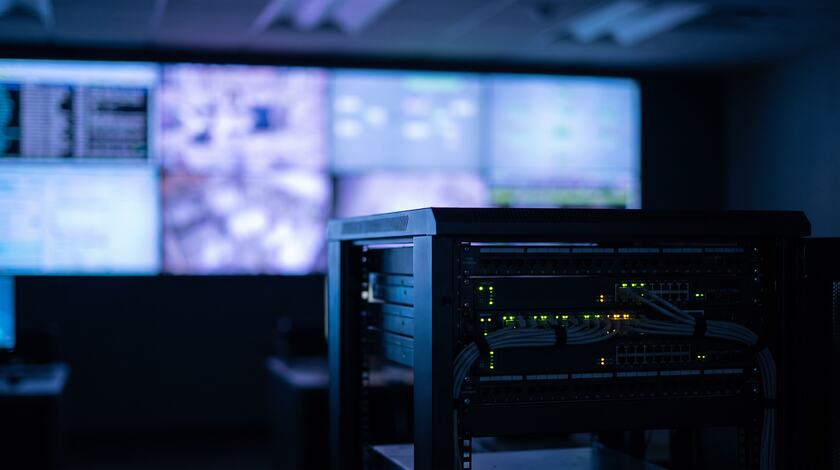
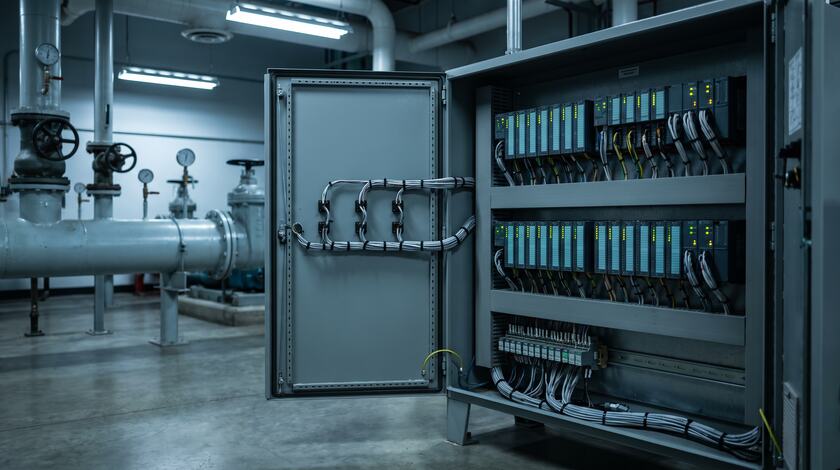
In 2026, the lines separating cyber and physical security will blur as they no longer operate as distinct domains. Today's enterprises function as networks of interconnected systems, with badge readers linked to cloud identity platforms, visitor management systems integrated with HR databases, and IoT sensors providing input for analytics tools. This interconnected reality necessitates a unified approach to cyber and physical threats.
A cyber breach can disable badge access and halt campus operations, while a compromised IoT device can serve as a gateway into core networks. In response, corporations are moving towards shared operations centers, coordinated incident response, and integrated intelligence layers.
Trend 2: AI Emerges as Both Threat Accelerator and Defense Multiplier
Artificial intelligence is significantly transforming the threat landscape. Attackers are leveraging AI to automate phishing efforts, swiftly identify vulnerabilities, create convincing deepfake identities, and deploy adaptive malware on a large scale. According to the Information Systems Audit and Control Association (ISA), generative AI is expected to amplify adversarial capabilities in the next two years.
Conversely, businesses are adopting AI to enhance their threat detection capabilities, minimize false positives, categorize anomalies across vast data sets, and support human decision-making. AI is also becoming critical in areas such as video analytics, screening systems, cloud security posture management, and security operations center (SOC) workflows.
The challenge lies in ensuring that AI systems are resilient to adversarial attacks, transparent for governance purposes, and integrated into a hybrid human-machine decision-making framework.
Trend 3: Cloud Fragility Evolves Into a Core Security Concern
The AWS outage of 2025 underscored a new reality for enterprise leaders: cloud availability is now a pivotal security concern rather than just an IT inconvenience. Various services, including cloud identity, authentication flows, mobile credentials, and access systems, rely heavily on cloud uptime. A failure in a cloud region can lead to immediate disruptions in physical operations.
Consequently, enterprises in 2026 are reassessing their architectural dependencies, implementing multi-region and multi-cloud resilience strategies, and incorporating uptime guarantees into their risk management and continuity plans. Security teams are increasingly involved in ensuring that architectural weaknesses do not translate into operational failures.
Trend 4: Cloud-Assisted Remote Screening Becomes a Force Multiplier
Staffing shortages, heightened operational demands, and the expansion of multi-site operations are pushing enterprises toward cloud-connected screening environments. These systems allow trained personnel to monitor and analyze outputs from multiple scanners, X-rays, or checkpoints simultaneously, significantly enhancing coverage without a corresponding increase in staff.
This model mirrors the evolution of modern SOCs, which feature centralized expertise, distributed sensors, AI-assisted triage, and consistent oversight at the enterprise level. In settings such as large hospitals, tech campuses, manufacturing sites, and corporate offices, remote screening facilitates quicker reviews, more consistent decision-making, and escalations that are no longer confined to a single physical location.
With a projected global shortage of over 4.8 million cybersecurity professionals, cloud-assisted screening is rapidly becoming a necessity rather than a luxury.
Trend 5: Compliance, Governance, and Vendor Accountability Intensify
Global regulatory pressures, including the Network and Information Security Directive 2 (NIS2) in Europe and new data and AI laws at the state level in the U.S., are prompting enterprises to reevaluate how they procure, test, and validate security technologies. Governing boards are now demanding evidence rather than mere assurances.
Organizations must demonstrate uptime, accuracy, bias mitigation, secure data flows, and operational reliability. Vendors are expected to provide transparency, auditability, and prove their effectiveness under real-world conditions. Security leaders are increasingly factoring governance into their vendor selection processes, seeking systems capable of withstanding scrutiny from auditors, regulators, and executive teams.
This shift towards evidence-based security is anticipated to accelerate throughout 2026, fundamentally altering how enterprises assess risk and choose their technology partners.
C-Suite Security Readiness Checklist for 2026
As the security landscape evolves, boards and regulators demand proof that systems can endure real-world pressures, not just during demonstrations. Leaders require a straightforward method to evaluate their readiness. The checklist below aids in quickly identifying strengths, vulnerabilities, and necessary changes for 2026.
1. Converged Security Architecture
Are our cyber and physical teams sharing intelligence and governance frameworks?
Do we have a unified incident response plan that addresses both digital breaches and physical disruptions?
2. AI Integrity and Resilience
Are our detection systems robust against adversarial AI and evasion attacks?
Are we employing AI to alleviate alert fatigue and enhance decision-making quality?
3. Cloud & Operational Continuity
Could a single cloud outage disrupt physical access, identity management, or business operations?
Are we regularly conducting tests for multi-region or multi-cloud failover at the operational level?
4. Remote, Cloud-Assisted Screening
Can our current screening model scale without requiring proportional increases in on-site staffing?
Do we possess the bandwidth, architecture, and governance necessary to support centralized, multi-site remote screening?
5. Compliance & Vendor Accountability
Can our technology partners demonstrate transparency, uptime, auditability, and validation under real-world conditions?
Do we have measurable security outcomes directly linked to enterprise risk metrics?